History Facts

Recent Content

Are you Smarter than a Sportscaster?

Show us what you've got!

Read more

Historical Figures 001

quiz

Read more

Fun Fact Face-Off: Daily Trivia

Think you've got what it takes?

Read more
The Satellite That Came Back to Life After 46 Years

The Satellite That Came Back to Life After 46 Years

A 1960s satellite went silent in 1967, then suddenly started transmitting again in 2013 after 46 years. It's still working today - and no one knows why.

Read more
Why We Have Fingerprints Is Still a Mystery

Why We Have Fingerprints Is Still a Mystery

Scientists still debate why humans evolved fingerprints. The leading theories keep getting disproven, making it one of biology's enduring mysteries.

Read more
See All Content

The Disturbing Reason Victorians Covered Mirrors When Someone Died

Walk into a Victorian home immediately after a death, and you'd find every mirror in the house draped with black cloth. The official explanation was spiritual: mirrors could trap the deceased's soul or allow it to become lost between worlds. But there was a darker, more practical reason that polite Victorian society wouldn't acknowledge.

Mirrors in the 1800s contained mercury, and decomposing bodies release gases that chemically react with mercury to create horrifying visual phenomena. When those gases interacted with mirror surfaces, they could cause the reflective coating to tarnish, warp, or create dark spots that genuinely looked like faces or figures emerging from the glass.

Decomposition begins immediately after death. Within hours, bacteria start breaking down tissues, releasing gases including hydrogen sulfide, methane, and cadaverine. These gases seep into the air and settle on surfaces—especially on the metallic backing of Victorian-era mirrors.

When decomposition gases came into contact with the mercury amalgam, they caused oxidation that created dark, shadowy patterns on the mirror's surface. In dim candlelight—the only lighting Victorians had at night—these patterns could genuinely appear to move, shift, or take on humanoid shapes.

Imagine sitting vigil beside your dead relative in flickering candlelight, glancing at a mirror, and seeing a dark figure that wasn't there before. Your rational mind knows it's a chemical reaction, but your grieving, exhausted brain interprets it as the deceased person's spirit trapped in the glass. Covering the mirrors prevented these disturbing visual phenomena entirely.

There was another element Victorians understood through experience: reflections in candlelight create the illusion of movement through a phenomenon called pareidolia. The human brain is hardwired to recognize faces and human forms, even in random patterns. Shadows dancing across a tarnished, gas-damaged mirror in dim light would trigger that response intensely.

Some Victorian homes reported mirrors "weeping" or developing streaks that looked like tears running down the glass. This was condensation mixed with chemical residue from decomposition gases. In humid environments, the gases would cause moisture to bead and run down the mirror's surface, creating streaks that genuinely appeared as if the mirror itself was crying.

Photography became popular during the Victorian era, and some families reported that photographs taken in rooms with uncovered mirrors during wakes showed strange shadows or figures. These were likely double exposures or light reflections interacting with the chemically altered mirror surfaces, but they reinforced the belief that mirrors were spiritually dangerous during the mourning period.

Modern mirrors use aluminum or silver backing instead of mercury, so they don't react the same way to decomposition gases. But some funeral homes and older households still follow the tradition of covering mirrors when someone dies, often without knowing the original scientific reasoning behind it.

The Victorians were masters of disguising practical necessity as spiritual ritual. They understood through experience that uncovered mirrors near decomposing bodies caused disturbing visual phenomena, but they explained it through supernatural belief rather than admitting the unpleasant chemical reality.

The next time you see an old superstition, consider that it might have started as a solution to a real problem that people didn't want to discuss directly. The Victorians didn't want to say "we cover mirrors because corpse gases make them look haunted"—so they said "we cover mirrors to protect the soul."

Both explanations led to the same result: covering the mirrors and sparing mourners from witnessing something genuinely disturbing.

Related Content

History Facts

27 December 2025

Post

How January 1st Became New Year's Day

Julius Caesar picked January 1st as New Year's Day in 46 BC. Before that, the new year was March 1st—which is why our month names don't make sense....

History Facts

22 December 2025

Post

The Paranoid History Behind Clinking Glasses During Toasts

Clinking glasses before drinking started as a medieval poison detection method. Now it's mandatory etiquette that nobody questions....

History Facts

08 December 2025

Post

How Wrapping Paper Was Invented by Accident

Decorative wrapping paper was invented by accident in 1917 when a Kansas City store ran out of tissue and sold fancy envelope linings instead. It sold out....

History Facts

29 November 2025

Post

Thomas Edison's Publicity Stunt Created Christmas Lights

Christmas lights weren't a tradition – they were Thomas Edison's marketing stunt to sell electricity....

History Facts

27 November 2025

Post

The Disturbing Origin of the Term "Black Friday" Revealed

Retailers claim "Black Friday" means stores turn profitable, but that's a cover story. The real origin involves police chaos and desperate rebranding....

History Facts

05 November 2025

Post

How Air Conditioning Changed American Politics Forever

Air conditioning moved millions to the South, shifted Electoral College votes, and completely reshaped American politics and elections....

History Facts

01 November 2025

Post

The Volcano That Caused a Year Without Summer

Mount Tambora's 1815 eruption caused global crop failures, snow in summer, and inspired Mary Shelley to write Frankenstein during the year without summer....

History Facts

30 October 2025

Post

The Dark History Behind Black Cat Superstitions

Black cats weren't always unlucky. Medieval Europe's plague created the superstition—and killing cats may have made the pandemic worse....

History Facts

28 October 2025

Post

The French Town Where Everyone Lost Their Minds at Once

In 1951, an entire French village went insane overnight—hallucinations, violence, deaths. Was it ergot poisoning or a CIA experiment?...

History Facts

21 October 2025

Post

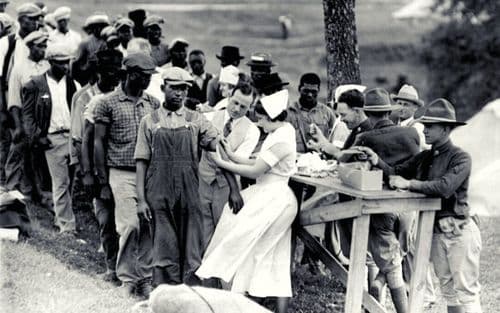
The Medical Betrayal That Changed Ethics Forever

For 40 years, doctors told Black men they were getting free healthcare while secretly watching them die from untreated syphilis....

History Facts

20 October 2025

Post

The Famous Psychology Case That Was Completely Made Up

The Kitty Genovese case—38 witnesses watched a murder and did nothing—is in every psychology textbook. The New York Times admits it was false....

History Facts

18 October 2025

Post

The Dyatlov Pass Mystery Still Haunts Russia

Nine hikers died mysteriously in Russia's Ural Mountains in 1959. They fled their tent into deadly cold wearing only underwear. What happened?...

History Facts

12 October 2025

Post

Why Clapping Became the Universal Sign of Approval

Ancient Romans invented organized applause as crowd control, then hired professional clappers to manipulate audiences. That's why we still do it today....

History Facts

03 October 2025

Post

The Civilization That Vanished in One Day

The advanced Minoan civilization disappeared overnight 3,500 years ago, leaving behind mysterious ruins and no trace of where the people went....

History Facts

28 September 2025

Post

The Mysterious Radio Signal Coming from Space for 50+ Years

The 1977 Wow Signal remains unexplained after 47 years - a precise radio transmission from space that exhibits signs of artificial intelligence....
Terms and ConditionsDo Not Sell or Share My Personal InformationPrivacy PolicyPrivacy NoticeAccessibility NoticeUnsubscribe
Copyright © 2026 Fun Fact Feed