History Facts

Recent Content

Are you Smarter than a Sportscaster?

Show us what you've got!

Read more

Historical Figures 001

quiz

Read more

Fun Fact Face-Off: Daily Trivia

Think you've got what it takes?

Read more
The Satellite That Came Back to Life After 46 Years

The Satellite That Came Back to Life After 46 Years

A 1960s satellite went silent in 1967, then suddenly started transmitting again in 2013 after 46 years. It's still working today - and no one knows why.

Read more
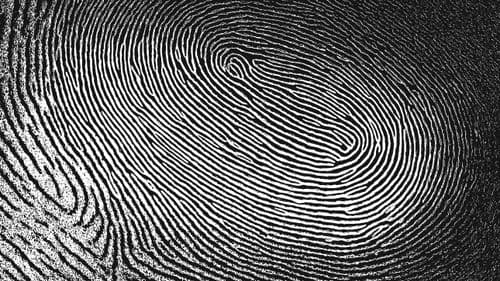
Why We Have Fingerprints Is Still a Mystery

Why We Have Fingerprints Is Still a Mystery

Scientists still debate why humans evolved fingerprints. The leading theories keep getting disproven, making it one of biology's enduring mysteries.

Read more
See All Content

Why Clapping Became the Universal Sign of Approval

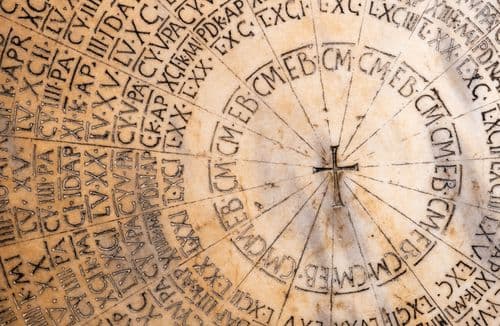
Every time you clap your hands to show appreciation, you're participating in a tradition that goes back thousands of years—but it didn't start as a simple way to say "good job." The earliest documented references to applause as a sign of approval come from ancient Rome in the 3rd century BC, where playwright Plautus would have actors step forward after performances and say "Valete et plaudite!"—Latin for "Goodbye and applause!"

But the Romans didn't just clap. They had an entire ritualized system of applause to express different degrees of approval: snapping fingers and thumbs, clapping with flat or hollow palms, and even waving the flaps of their togas. Political leaders would carefully measure how long and loud the applause lasted after their speeches to gauge public support. If the crowd really loved you, they'd applaud loudly for an extended period. If they didn't, the silence spoke volumes.

Then things got manipulative. In 4th century Athens, theaters began hiring "claqueurs"—professional clappers paid to applaud, laugh, or cry at specific moments to influence audience reactions. Competition between comedians was so fierce that swaying judges with paid applause became standard practice.

The system reached absurd heights when Roman Emperor Nero established an entire "school of applause" and traveled with a claque of 5,000 knights and soldiers whose only job was to cheer for him at performances. By 17th century France, the claque had become a highly organized industry—you could pay for different services including professional laughers, criers, and people who would talk up the performance to other audience members.

The practice became so widespread that composers like Gustav Mahler, Robert Schumann, and Felix Mendelssohn began requesting that their works be performed with no breaks between movements specifically to avoid applause—which is why clapping between movements at classical concerts is still considered rude today.

Interestingly, when these pieces were originally written, composers like Beethoven and Mozart would immediately repeat sections if the audience applauded enthusiastically during technically difficult parts.

So why did clapping specifically become the standard? Compared to vocalizing approval through speech, clapping is easier, louder, more anonymous in crowds, and you can't tell someone's age, gender, or origin from their clap. What started as one of many ways Romans showed approval became the universal language of appreciation—all because ancient politicians realized they needed a way to measure public opinion from massive crowds.

Related Content

History Facts

27 December 2025

Post

How January 1st Became New Year's Day

Julius Caesar picked January 1st as New Year's Day in 46 BC. Before that, the new year was March 1st—which is why our month names don't make sense....

History Facts

22 December 2025

Post

The Paranoid History Behind Clinking Glasses During Toasts

Clinking glasses before drinking started as a medieval poison detection method. Now it's mandatory etiquette that nobody questions....

History Facts

08 December 2025

Post

How Wrapping Paper Was Invented by Accident

Decorative wrapping paper was invented by accident in 1917 when a Kansas City store ran out of tissue and sold fancy envelope linings instead. It sold out....

History Facts

29 November 2025

Post

Thomas Edison's Publicity Stunt Created Christmas Lights

Christmas lights weren't a tradition – they were Thomas Edison's marketing stunt to sell electricity....

History Facts

27 November 2025

Post

The Disturbing Origin of the Term "Black Friday" Revealed

Retailers claim "Black Friday" means stores turn profitable, but that's a cover story. The real origin involves police chaos and desperate rebranding....

History Facts

05 November 2025

Post

How Air Conditioning Changed American Politics Forever

Air conditioning moved millions to the South, shifted Electoral College votes, and completely reshaped American politics and elections....

History Facts

01 November 2025

Post

The Volcano That Caused a Year Without Summer

Mount Tambora's 1815 eruption caused global crop failures, snow in summer, and inspired Mary Shelley to write Frankenstein during the year without summer....

History Facts

30 October 2025

Post

The Dark History Behind Black Cat Superstitions

Black cats weren't always unlucky. Medieval Europe's plague created the superstition—and killing cats may have made the pandemic worse....

History Facts

29 October 2025

Post

The Disturbing Reason Victorians Covered Mirrors When Someone Died

Victorians covered mirrors after death to protect souls—but the real reason involved decomposition gases reacting with mercury to create ghostly images....

History Facts

28 October 2025

Post

The French Town Where Everyone Lost Their Minds at Once

In 1951, an entire French village went insane overnight—hallucinations, violence, deaths. Was it ergot poisoning or a CIA experiment?...

History Facts

21 October 2025

Post

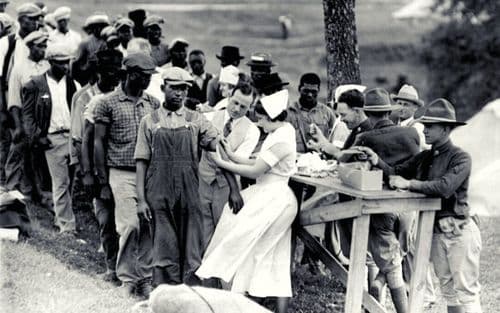
The Medical Betrayal That Changed Ethics Forever

For 40 years, doctors told Black men they were getting free healthcare while secretly watching them die from untreated syphilis....

History Facts

20 October 2025

Post

The Famous Psychology Case That Was Completely Made Up

The Kitty Genovese case—38 witnesses watched a murder and did nothing—is in every psychology textbook. The New York Times admits it was false....

History Facts

18 October 2025

Post

The Dyatlov Pass Mystery Still Haunts Russia

Nine hikers died mysteriously in Russia's Ural Mountains in 1959. They fled their tent into deadly cold wearing only underwear. What happened?...

History Facts

03 October 2025

Post

The Civilization That Vanished in One Day

The advanced Minoan civilization disappeared overnight 3,500 years ago, leaving behind mysterious ruins and no trace of where the people went....

History Facts

28 September 2025

Post

The Mysterious Radio Signal Coming from Space for 50+ Years

The 1977 Wow Signal remains unexplained after 47 years - a precise radio transmission from space that exhibits signs of artificial intelligence....
Terms and ConditionsDo Not Sell or Share My Personal InformationPrivacy PolicyPrivacy NoticeAccessibility NoticeUnsubscribe
Copyright © 2026 Fun Fact Feed