
Fun Facts

Recent Content

Are you Smarter than a Sportscaster?

Show us what you've got!

Read more

Historical Figures 001

quiz

Read more

Fun Fact Face-Off: Daily Trivia

Think you've got what it takes?

Read more
The Satellite That Came Back to Life After 46 Years

The Satellite That Came Back to Life After 46 Years

A 1960s satellite went silent in 1967, then suddenly started transmitting again in 2013 after 46 years. It's still working today - and no one knows why.

Read more
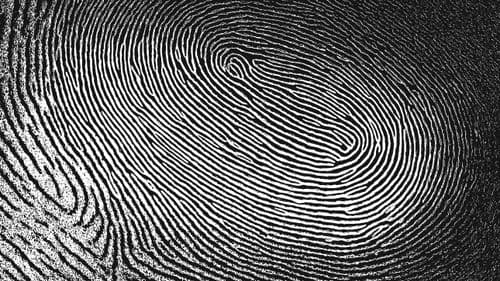
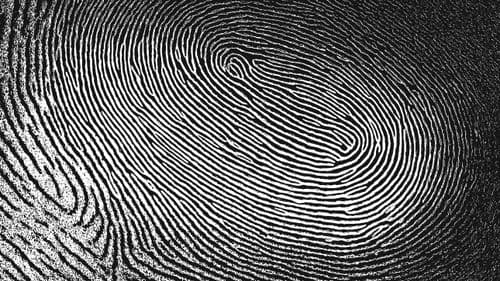
Why We Have Fingerprints Is Still a Mystery

Why We Have Fingerprints Is Still a Mystery

Scientists still debate why humans evolved fingerprints. The leading theories keep getting disproven, making it one of biology's enduring mysteries.

Read more
See All Content

Why 80% of New Year's Resolutions Fail by February

Person crossing out failed New Year's resolutions

Every January 1st, millions of people make ambitious New Year's resolutions. By February 1st, 80% of those resolutions have already failed. And it's not because people lack willpower—it's because our brains are biologically terrible at the kind of change resolutions demand.

Here's the first problem: resolutions target habit change, but habits are controlled by the basal ganglia—the part of your brain that runs on autopilot. Conscious decisions happen in your prefrontal cortex. These two systems don't communicate well.

When you decide "I'm going to exercise every day," you're using your prefrontal cortex. But your basal ganglia—which controls your actual daily routine—didn't get the memo. It's still running your old pattern: wake up, coffee, sit on couch, scroll phone.

Changing a habit requires physically rewiring neural pathways through consistent repetition. Research shows it takes an average of 66 days to form a new habit—not the 21 days people often claim. That's over two months of perfect consistency before your brain accepts the new behavior as default.

The second problem: January 1st is the worst possible time to start. You're coming off weeks of indulgence, irregular sleep, travel stress, and holiday chaos. Your willpower reserves—which neuroscientists call "ego depletion"—are at their lowest point of the year.

Willpower functions like a muscle that gets tired. Every decision you make, every temptation you resist, depletes it. By early January, you've spent weeks making extra decisions (gifts, travel, social obligations) and resisting nothing (eat the cookies, sleep in, skip the gym). You're starting with an empty tank.

Then there's the "what-the-hell effect." When you slip up once—miss one gym day, eat one cookie—your brain interprets it as total failure. Instead of getting back on track, people think "well, I already ruined it" and abandon the resolution entirely. One mistake becomes permanent defeat.

The specificity problem makes it worse. Resolutions like "lose weight" or "get healthy" are too vague for your brain to execute. Your basal ganglia needs concrete actions: "walk 20 minutes after dinner" or "eat vegetables at lunch." Vague goals produce vague results—meaning none.

Social pressure also sabotages resolutions. When you announce your goal publicly, your brain experiences a premature sense of accomplishment. You get the dopamine hit from people's approval without actually doing the work. This is called "social reality"—your brain thinks the goal is already achieved.

The final nail in the coffin: most resolutions involve removing something pleasurable (stop eating sugar, stop staying up late) without replacing it with an equally rewarding behavior. Your brain's reward system doesn't understand sacrifice without substitution. It just experiences loss and seeks to restore what's missing.

So every year, 80% of people set themselves up for neurologically predictable failure, then blame themselves for lacking discipline. The system is designed to fail. Understanding that doesn't fix it—but at least you'll know why you're eating leftover Christmas cookies in mid-January while your gym membership gathers dust!

Related Content

Fun Facts

11 January 2026

Post

The Satellite That Came Back to Life After 46 Years

A 1960s satellite went silent in 1967, then suddenly started transmitting again in 2013 after 46 years. It's still working today - and no one knows why....

Fun Facts

10 January 2026

Post

Why We Have Fingerprints Is Still a Mystery

Scientists still debate why humans evolved fingerprints. The leading theories keep getting disproven, making it one of biology's enduring mysteries....

Fun Facts

08 January 2026

Post

The Alaskan Village Disappearing Into the Sea

Alaska Native villages are sinking as permafrost thaws at 70 feet per year. 144 communities need to relocate, but the government has no plan to help them....

Fun Facts

07 January 2026

Post

Why Airplane Windows Have Tiny Holes in Them

That tiny hole in airplane windows isn't a defect - it's the only thing preventing the window from exploding at 35,000 feet. Here's how it works....

Fun Facts

06 January 2026

Post

The Company That Secretly Owns Your Eyeglasses

One Italian company you've never heard of owns Ray-Ban, Oakley, LensCrafters, Sunglass Hut, and controls 80% of the eyewear industry....

Fun Facts

05 January 2026

Post

The Man Who Faked His Death and Hid Next Door

John Darwin faked his death in a kayaking accident and secretly lived next door to his family for 5 years. One photo destroyed everything....

Fun Facts

04 January 2026

Post

The Town Where It Rains Fish From the Sky

Every year in Yoro, Honduras, fish rain from the sky during storms. It's happened for 100+ years, and scientists still can't fully explain it....

Fun Facts

03 January 2026

Post

Why Printer Ink Costs More Than Human Blood

Printer ink costs more per ounce than human blood. Here's how printer companies engineered one of retail's biggest scams to trap you into paying....

Fun Facts

23 December 2025

Post

How November and December Are the Most Dangerous Months

Holiday decorating sends over 15,000 people to the ER annually, and spoiled Christmas leftovers cause 400,000+ illnesses. ...

Fun Facts

14 December 2025

Post

Why Pregnancy Permanently Rewires Your Brain

UC Irvine researchers discovered pregnancy causes permanent brain structure changes—gray matter shrinks while white matter grows, and it never goes back....

Fun Facts

12 December 2025

Post

Why Certain Songs Get Stuck in Your Head

Songs get stuck in your head because they hijack your brain's phonological loop. Scientists found listening to the whole song actually stops the repetition....

Fun Facts

07 December 2025

Post

Why Evergreen Trees Stay Green in Winter

Evergreens staying green in winter isn't about strength—it's a risky evolutionary gamble that sometimes backfires catastrophically when winter hits hard....

Fun Facts

06 December 2025

Post

The Vitamin Scam Running Since the 1940s

Most vitamins aren't absorbed by your body and get immediately rejected, but the supplement industry has been running this profitable scam since the 1940s....

Fun Facts

05 December 2025

Post

The Science Behind Why Time Feels Faster as You Age

Time genuinely moves faster as you age—your brain processes it differently due to fewer new experiences and slower neural processing. Science explains why....

Fun Facts

04 December 2025

Post

The Psychological Trick Behind Gift Cards

Billions in gift card money goes unspent every year because retailers designed them that way. The psychological tricks behind gift cards are pure profit....
Terms and ConditionsDo Not Sell or Share My Personal InformationPrivacy PolicyPrivacy NoticeAccessibility NoticeUnsubscribe
Copyright © 2026 Fun Fact Feed