
Fun Facts

Recent Content

Are you Smarter than a Sportscaster?

Show us what you've got!

Read more

Historical Figures 001

quiz

Read more

Fun Fact Face-Off: Daily Trivia

Think you've got what it takes?

Read more
The Satellite That Came Back to Life After 46 Years

The Satellite That Came Back to Life After 46 Years

A 1960s satellite went silent in 1967, then suddenly started transmitting again in 2013 after 46 years. It's still working today - and no one knows why.

Read more
Why We Have Fingerprints Is Still a Mystery

Why We Have Fingerprints Is Still a Mystery

Scientists still debate why humans evolved fingerprints. The leading theories keep getting disproven, making it one of biology's enduring mysteries.

Read more
See All Content

Why Evergreen Trees Stay Green in Winter

Evergreen trees staying green through winter while other trees go bare seems like a sign of strength and resilience, right? Wrong. Evergreens made a completely different evolutionary bet than deciduous trees – and sometimes that bet backfires catastrophically.

First, let's destroy the myth that evergreens are "stronger" than trees that lose their leaves. Deciduous trees drop their leaves as a brilliant survival strategy. Winter means less sunlight and frozen water that roots can't access. Keeping leaves alive through winter would waste enormous energy for minimal photosynthesis benefit.

By dropping leaves, deciduous trees shut down their energy-expensive systems and go dormant. They conserve resources and avoid damage from snow weight and ice. Come spring, they wake up and grow fresh new leaves optimized for the current conditions.

Evergreens, on the other hand, chose the opposite strategy: keep their leaves (needles) year-round and photosynthesize whenever possible. This works in specific environments but comes with serious trade-offs.

Evergreen needles are specially designed to survive winter. They're covered in a waxy coating that prevents water loss, they have a small surface area to minimize damage from snow and ice, and they contain compounds that act like antifreeze to prevent cellular damage from freezing.

But here's the catch: those needles are expensive to maintain. The waxy coating, the antifreeze compounds, the tough structure – all of this requires energy. Evergreens are constantly spending resources to keep those needles alive, even when photosynthesis is minimal.

This strategy only makes sense in environments where winters are relatively mild or where growing seasons are so short that deciduous trees couldn't regrow leaves fast enough. In northern boreal forests or high altitudes, evergreens have an advantage because they can start photosynthesizing immediately when conditions improve, while deciduous trees need weeks to grow new leaves.

But when the bet goes wrong, it goes really wrong. During severe winters, ice storms, or heavy snow, those persistent needles become liabilities. The weight of snow and ice on evergreen branches can snap entire trees. Deciduous trees with bare branches shed snow easily and flex without breaking.

Evergreens are also more vulnerable to winter drought. Because they keep their needles, they're still losing water through transpiration even when the ground is frozen and roots can't access water. This can lead to "winter burn" where needles turn brown and die because the tree literally dried out.

In extremely cold environments, some evergreens actually lose the evolutionary bet entirely. When temperatures drop too low for too long, the cost of maintaining those needles outweighs any benefit. That's why the northernmost forests eventually give way to tundra – it gets so cold that even evergreens can't make their strategy work.

Even more interesting: some evergreens cheat. Tamarack and bald cypress are technically conifers (the evergreen family) but they drop their needles every fall like deciduous trees. They evolved to hedge their bets by combining strategies.

So the next time you see an evergreen standing green and "strong" in winter while other trees are bare, remember: it's not displaying strength – it's gambling on a high-risk, high-reward strategy that sometimes fails spectacularly. Those bare deciduous trees made the safer bet, and they'll be just fine come spring.


Related Content

Fun Facts

11 January 2026

Post

The Satellite That Came Back to Life After 46 Years

A 1960s satellite went silent in 1967, then suddenly started transmitting again in 2013 after 46 years. It's still working today - and no one knows why....

Fun Facts

10 January 2026

Post

Why We Have Fingerprints Is Still a Mystery

Scientists still debate why humans evolved fingerprints. The leading theories keep getting disproven, making it one of biology's enduring mysteries....

Fun Facts

08 January 2026

Post

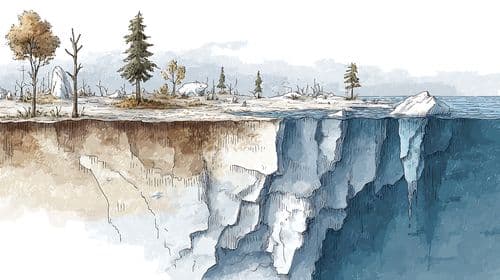
The Alaskan Village Disappearing Into the Sea

Alaska Native villages are sinking as permafrost thaws at 70 feet per year. 144 communities need to relocate, but the government has no plan to help them....

Fun Facts

07 January 2026

Post

Why Airplane Windows Have Tiny Holes in Them

That tiny hole in airplane windows isn't a defect - it's the only thing preventing the window from exploding at 35,000 feet. Here's how it works....

Fun Facts

06 January 2026

Post

The Company That Secretly Owns Your Eyeglasses

One Italian company you've never heard of owns Ray-Ban, Oakley, LensCrafters, Sunglass Hut, and controls 80% of the eyewear industry....

Fun Facts

05 January 2026

Post

The Man Who Faked His Death and Hid Next Door

John Darwin faked his death in a kayaking accident and secretly lived next door to his family for 5 years. One photo destroyed everything....

Fun Facts

04 January 2026

Post

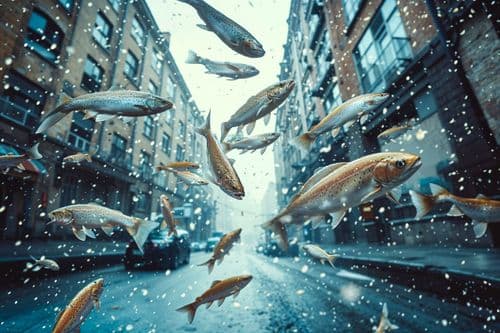
The Town Where It Rains Fish From the Sky

Every year in Yoro, Honduras, fish rain from the sky during storms. It's happened for 100+ years, and scientists still can't fully explain it....

Fun Facts

03 January 2026

Post

Why Printer Ink Costs More Than Human Blood

Printer ink costs more per ounce than human blood. Here's how printer companies engineered one of retail's biggest scams to trap you into paying....

Fun Facts

29 December 2025

Post

Why 80% of New Year's Resolutions Fail by February

80% of New Year's resolutions fail by February. Brain science explains why we're biologically terrible at keeping them—and why January 1st makes it worse....

Fun Facts

23 December 2025

Post

How November and December Are the Most Dangerous Months

Holiday decorating sends over 15,000 people to the ER annually, and spoiled Christmas leftovers cause 400,000+ illnesses. ...

Fun Facts

14 December 2025

Post

Why Pregnancy Permanently Rewires Your Brain

UC Irvine researchers discovered pregnancy causes permanent brain structure changes—gray matter shrinks while white matter grows, and it never goes back....

Fun Facts

12 December 2025

Post

Why Certain Songs Get Stuck in Your Head

Songs get stuck in your head because they hijack your brain's phonological loop. Scientists found listening to the whole song actually stops the repetition....

Fun Facts

06 December 2025

Post

The Vitamin Scam Running Since the 1940s

Most vitamins aren't absorbed by your body and get immediately rejected, but the supplement industry has been running this profitable scam since the 1940s....

Fun Facts

05 December 2025

Post

The Science Behind Why Time Feels Faster as You Age

Time genuinely moves faster as you age—your brain processes it differently due to fewer new experiences and slower neural processing. Science explains why....

Fun Facts

04 December 2025

Post

The Psychological Trick Behind Gift Cards

Billions in gift card money goes unspent every year because retailers designed them that way. The psychological tricks behind gift cards are pure profit....
Terms and ConditionsDo Not Sell or Share My Personal InformationPrivacy PolicyPrivacy NoticeAccessibility NoticeUnsubscribe
Copyright © 2026 Fun Fact Feed